
About Bikini
Eighty years ago today, the US began 67 nuclear bomb tests in the Marshall Islands, displacing and harming the health and living standards of the Bikinians. Everyone should know their story.


On July 1st, 1946, the United States military initiated Operation Crossroads at Bikini Atoll in the Marshall Islands, marking the dawn of the atmospheric nuclear testing era. This fateful anniversary serves as a stark reminder of a largely obscured chapter in global history—one characterized by geopolitics, environmental devastation, and human suffering. In an episode of Project Save the World, host Metta Spencer, filmmaker Andrew Nisker and biogeochemist Dr. Thomas Goreau illuminated the enduring ramifications of these tests. Their dialogue exposes how 67 nuclear tests transformed pristine Pacific ecosystems into radioactive sacrifice zones and permanently displaced Marshallese people. The legacy of these tests intersects with modern climate change, framing a narrative of a population twice victimized by global powers.
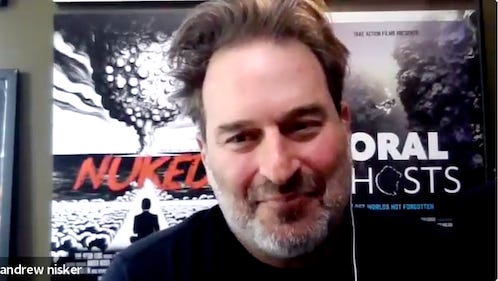
Andrew Nisker
The Human Toll: Exile and Ill Health
The human cost of Operation Crossroads began with deception. In 1946, the U.S. Navy informed the residents of Bikini Atoll that they must temporarily vacate their ancestral lands “for the good of mankind,” promising they could return within a few weeks. Instead, they were permanently exiled. The Bikinians were relocated to various uninhabited islands, most notably Kili Island. This relocation proved disastrous due to fundamental geographical differences. While an atoll features a protective lagoon cove that allows safe fishing and transport between smaller islets, a single island like Kili is exposed to the open Pacific. The rough reef, large waves, and abundant sharks effectively imprisoned the population, rendering traditional reef fishing impossible.
