
About 'The War in Sudan'
This is assigned reading for all registered participants in the Project Save the World Inquiry 'Preventing War." To register, check the pop-up window on our website, https://tosavetheworld.ca.

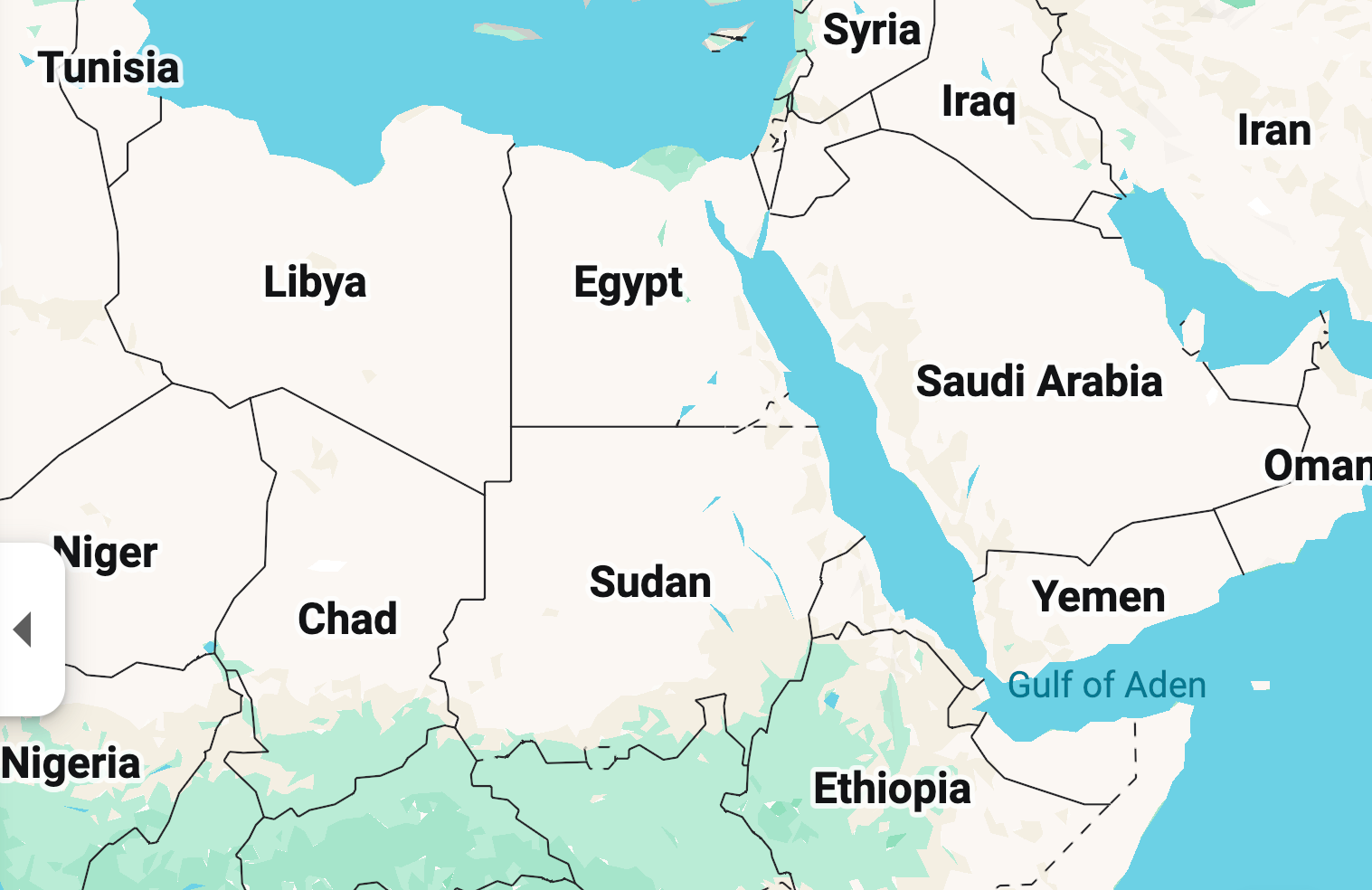
In April 2023, the streets of Khartoum, Sudan’s capital, erupted into a warzone. The conflict, fought primarily between the Sudanese Armed Forces (SAF) commanded by General Abdel Fattah al-Burhan, and the paramilitary Rapid Support Forces (RSF) led by General Mohamed Hamdan Dagalo (widely known as Hemedti), rapidly plunged the nation into one of the most severe humanitarian crises of the 21st century. Millions have been displaced, thousands killed, and the specter of famine and ethnic cleansing has returned to regions like Darfur.
For participants in this Inquiry into War series, the tragedy of Sudan serves as a vital, devastating case study. It is not merely a story of two rival generals battling for supremacy; it is a profound failure of international conflict prevention. At multiple stages over the past two decades—and particularly between the 2019 civilian revolution and the 2023 outbreak of hostilities—there were distinct moments where the international community, regional bodies, and global governance institutions could have intervened. By examining the history of this war and the stages leading up to it, we can identify how the mechanisms we have discussed previously—the Responsibility to Protect (R2P), UN peacekeeping, international law enforcement (ICC), and the potential for new global governance structures—were either ignored, undermined, or absent.
Stage 1: The Roots of Militarization and the Darfur Genocide (2003–2019)
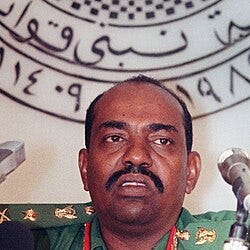
To understand the current war, one must look back to the regime of Omar al-Bashir, who ruled Sudan for thirty years following a coup in 1989. Bashir’s survival strategy relied on “coup-proofing” his regime by pitting different security apparatuses against one another.
When a rebellion broke out in the western region of Darfur in 2003, Bashir did not solely rely on the national army (the SAF) to crush it. Instead, he armed and empowered Arab militias known as the Janjaweed. These militias waged a brutal campaign of ethnic cleansing, mass rape, and scorched-earth tactics against non-Arab populations. The United Nations and the International Criminal Court (ICC) eventually recognized these acts as genocide and crimes against humanity.
In 2013, Bashir formalized the Janjaweed into the Rapid Support Forces (RSF), elevating Hemedti to a position of immense state power. The RSF was granted legal status equivalent to the regular army, effectively creating a dual-military state.
Missed Opportunities for Intervention:
· Failure of International Law Enforcement: The ICC issued arrest warrants for Omar al-Bashir and other key figures for genocide and war crimes in Darfur. However, lacking an independent enforcement mechanism, the ICC relied on member states to execute the warrants. Bashir traveled freely to several countries, including South Africa and Jordan (both ICC members), without being arrested. This failure sent a clear message to Sudanese warlords, including Hemedti and Burhan: international law lacks teeth. Had the ICC judgements been enforced through a stronger global governance mechanism, the culture of impunity that fueled the 2023 war might have been dismantled.
· Inadequate Peacekeeping: The UN/African Union hybrid peacekeeping mission in Darfur (UNAMID) was consistently under-resourced and restricted by the Bashir government. The international community failed to operationalize the “Responsibility to Protect” (R2P) doctrine effectively, allowing the perpetrators to retain their power and eventually morph into the RSF.
Stage 2: The 2019 Revolution and the Fragile Transition
In December 2018, the people of Sudan achieved what the international community could not. Driven by a culture of nonviolent resistance, civilian neighborhood Resistance Committees organized massive, sustained protests against the Bashir regime. In April 2019, the military—led jointly by Burhan (SAF) and Hemedti (RSF)—realized Bashir was a liability and ousted him.
The civilians demanded a full transition to democracy. However, on June 3, 2019, RSF and SAF forces brutally massacred over a hundred peaceful protesters in Khartoum. Despite this atrocity, the international community, led by the US, UK, Saudi Arabia, and the UAE (the “Quad”), pushed the civilian coalition (the Forces of Freedom and Change, or FFC) into a power-sharing agreement with the military. This created a transitional government with a civilian Prime Minister, Abdalla Hamdok, but left the military generals in charge of a Sovereign Council.
Missed Opportunities for Intervention:
· Appeasing Men with Guns: The international mediation effort prioritized short-term stability over long-term peace. By forcing civilians to share power with the architects of the June 3 massacre and the Darfur genocide, international mediators legitimized the warlords. A more robust intervention would have isolated the military junta financially and diplomatically, supporting the cultural norm of nonviolence demonstrated by the Sudanese people.
· Failure to Disarm: There was no enforced mechanism for Disarmament, Demobilization, and Reintegration (DDR). The RSF was allowed to maintain its independent financial empire (including gold mines) and foreign mercenary contracts (fighting in Yemen for the Saudi/UAE coalition). A specialized UN peacekeeping mandate focused strictly on overseeing a DDR process, backed by the threat of severe, coordinated global sanctions, was a missed opportunity.
Stage 3: The 2021 Coup and the Death of the Transition
The civilian-military power-sharing agreement was scheduled to hand over chairmanship of the Sovereign Council to a civilian in late 2021. To prevent this loss of power and to avoid accountability for past crimes and economic corruption, Burhan and Hemedti joined forces on October 25, 2021, launching a military coup that ousted Prime Minister Hamdok and ended the democratic transition.
Following the coup, the Sudanese people returned to the streets, maintaining a strict adherence to nonviolent resistance despite lethal crackdowns by the security forces.
Missed Opportunities for Intervention:
· Security Council Paralysis: The UN Security Council’s response to the coup was muted, largely due to the veto power (or threat thereof) of Russia and China, who favored non-interference and had ties to the Sudanese military. This is a textbook example of where the “Uniting for Peace” mechanism could have been utilized. Had the UN General Assembly bypassed the Security Council to condemn the coup forcefully, mandate targeted sanctions, and authorize a protective mission for civilians, the generals’ calculus might have changed.
· Withdrawal of UN Presence: In the lead-up to the coup, the UN had replaced its peacekeeping mission (UNAMID) with a political mission (UNITAMS). UNITAMS lacked the mandate and the muscle to protect civilians or enforce agreements. When the coup happened, the UN was reduced to issuing statements of concern.
Stage 4: The Framework Agreement and the Road to War (2022–2023)
Facing unrelenting civilian protests and a collapsing economy, the military junta found it difficult to govern. The international community, led by the UN, the African Union, and the regional bloc IGAD, initiated a new political process. In December 2022, a “Framework Agreement” was signed between the military and certain civilian factions.
However, this agreement contained a fatal flaw: it dictated that the RSF must be integrated into the SAF within a specific timeframe, but left the details to be negotiated by the generals themselves. Burhan wanted the RSF integrated within two years; Hemedti demanded ten years. Tensions skyrocketed. The SAF and RSF began massive troop deployments in Khartoum and other cities. The drumbeats of war were deafening, yet the international community continued to push for the signing of a final political agreement, ignoring the imminent threat of armed conflict.
On April 15, 2023, the tension snapped, and full-scale war broke out.
Missed Opportunities for Intervention:
· Ignoring Early Warning Signs: Civil society groups and Resistance Committees warned repeatedly that the Framework Agreement was creating a binary showdown between two heavily armed factions. The international mediators suffered from “diplomatic tunnel vision,” pushing for a signing ceremony rather than addressing the massive troop buildups.
· Lack of Preventive Diplomacy and R2P: As troops amassed in Khartoum, there was no invocation of the Responsibility to Protect. A robust global governance system could have authorized an immediate, preventive deployment of international observers or a rapid-reaction peacekeeping force to buffer the two armies.
· The Problem of the Nation-State Model: The mediation treated Burhan (as the de facto head of state) and Hemedti (as his deputy) as legitimate sovereign actors. The voices of the Sudanese people—who were overwhelmingly anti-war and pro-democracy—were structurally marginalized. Had there been a Global Parliamentary Assembly elected by citizens rather than appointed by nation-states, the Sudanese civilian democratic movement could have appealed directly to a body that prioritized human security over the sovereign privileges of military dictators.
The Outbreak and Conduct of the War
Since April 2023, the war has been characterized by gross violations of international humanitarian law. The RSF has embedded itself in civilian neighborhoods in Khartoum, engaging in looting, sexual violence, and the occupation of hospitals. In Darfur, the RSF and allied militias have resumed targeted ethnic killings against the Masalit people, prompting the ICC to open a new investigation. Conversely, the SAF has utilized indiscriminate aerial bombardment, dropping barrel bombs on densely populated residential areas.
The international response has been tragically fragmented. Peace talks in Jeddah (brokered by the US and Saudi Arabia) have repeatedly failed to secure a lasting ceasefire, largely because they rely on the goodwill of the belligerents and lack enforcement mechanisms. Regional actors have exacerbated the conflict, with evidence pointing to external powers supplying arms to both sides in violation of a UN arms embargo on Darfur.
Analysis: Lessons for War Prevention
As we engage in the final week of our inquiry, the Sudan conflict illustrates the catastrophic consequences of our current, inadequate global security architecture.
1. The Necessity of Enforcing International Law: The impunity enjoyed by Bashir, Burhan, and Hemedti over two decades demonstrates that international law is meaningless without enforcement. If the ICC had an independent police force, or if member states were legally compelled by a reformed UN to execute arrest warrants, warlords could not freely accumulate the power necessary to destroy a country.
2. Overcoming the Security Council Veto: The UN Security Council’s inability to act decisively in Sudan—whether during the Darfur genocide, the 2021 coup, or the 2023 war—highlights the fatal flaw of the veto system. Competing geopolitical interests allowed the crisis to fester. The “Uniting for Peace” resolution must be normalized as a tool to authorize peacekeeping and civilian protection missions when the Security Council is paralyzed.
3. Rethinking Peacekeeping and R2P: Peacekeeping in Sudan (UNAMID) was deployed too late, with too weak a mandate, and was withdrawn too soon. The Responsibility to Protect must be transformed from a theoretical norm into a binding obligation. Preventive deployments should be triggered automatically by specific early warning indicators of mass atrocities or severe militarization, rather than requiring the consent of the very regimes planning the violence.
4. Cultural Norms and Global Governance: Perhaps the most heartbreaking aspect of the Sudan tragedy is that the Sudanese people themselves embodied the cultural norm of nonviolence. The Resistance Committees demonstrated a profound commitment to peaceful democratic transition. Yet, the international system, built around the primacy of the nation-state and realpolitik, repeatedly prioritized the men with guns. A new global governance institution, such as a UN Parliamentary Assembly, could provide a platform to legitimize and support nonviolent civilian movements, bypassing illegitimate military juntas.
Conclusion
The war in Sudan was not an unpredictable natural disaster; it was the entirely foreseeable result of decades of militarization, impunity, and the failure of international institutions to intervene effectively. The missed opportunities—failing to enforce ICC warrants, appeasing warlords during democratic transitions, ignoring the buildup to war, and allowing the UN Security Council to remain paralyzed—form a roadmap of what must change.
As you prepare for the fifth week of this series, consider how the specific proposals we have discussed—from the TPNW to a Global Parliamentary Assembly, from strengthening the ICJ to operationalizing “Uniting for Peace”—could be practically applied to prevent the next Sudan. The tragedy of Khartoum and Darfur demands that we move beyond the current, broken system of global security and design institutions capable of actually protecting human life.