
About 'War and Some Alternatives'
This assigned readinig for registered participants in Project Save the World's 2026 Inquiry into War: "Preventing War,"May 13. To register, see https://tosavetheworld.ca

Even before our primate ancestors began to walk upright, there were wars—times when whole human communities tried to kill each other. One site of skeletons was found in Kenya dating back 9,500 years showing that a group of 27 people had been massacred together.
Indeed, levels of violence were probably higher in prehistoric times than today. For example, in one cemetery about 14,000 years old, about 45 percent of the skeletons showed signs of violent death. An estimated 15 percent of deaths in primitive societies were caused by warfare.
But life did not consistently become friendlier as our species spread. By one estimate, there were 14,500 wars between 3500 BC and the late twentieth century. These took around 3.5 billion lives.
So, is war simply an intrinsic part of “human nature,” that we cannot reasonably hope to overcome? No, for the frequency and extent of warfare varies more than can be attributed to genetics. In some societies, war is completely absent. Douglas Fry, checking the ethnographic records, identified 74 societies that have clearly been non-warring; some even lacked a word for “war.”
According to Steven Pinker, we are living in the most peaceful period in human history!
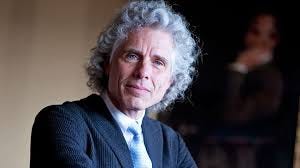
Stephen Pinker
Pinker argues that violence has declined, both recently and over the millennia. His 2018 book Enlightenment Now, contains a graph showing the numbers of battle deaths by year from 1945 to 2015. A huge spike represents World War II, of course, for that was most lethal war in human history, causing at least 55 million deaths. How can we reconcile that ghastly number with any claim that the modern era is a peaceful epoch?
Pinker’s proof is based on distinguishing sharply between absolute numbers and rates. To be sure, 55 million is a huge number, but the Mongol Conquests killed 40 million people back in the thirteenth century, out of a world population only about one-seventh the size of the world’s 1950 population. Pinker says that if World War II had matched the Mongols’ stupendous rate of killing, about 278 million people would have been killed.
And there was an even worse war than the Mongol Conquest: the An Lushan Revolt of eighth century China, an eight-year rebellion that resulted in the loss of 36 million people — two-thirds of the empire’s population, and a sixth of the world’s population at the time. Had it matched that level of atrocity, considering the size of the world’s population in the 1940s, World War II would have killed 419 million people! Pinker calls An Lushan the worst war in human history. By his calculations, based on rates or percentages, World War II was only the ninth worst in history and World War I was the 16th worst.
Moreover, Pinker shows that the two world wars were huge spikes in a graph of war deaths that has declined remarkably since 1950. There had been a slight upward bump since 2010, representing the civil war in Syria and, since his book was published, the current wars in Ukraine, Gaza, Sudan, and Iran, but even that increase is not large when compared to the preceding centuries.
Pinker explains this civilizing trend in terms of two main historical changes – first, the transition to agriculture from hunting and gathering, which decreased rates of violent death fivefold from chronic raiding and feuding.
Second, in Europe between the Middle Ages and the 20th century, feudal territories were consolidated into large commercial kingdoms, which led to a tenfold-to-fiftyfold decline in homicide rates. There have been numerous other changes since then, including the abolition of slavery, dueling, sadistic punishment, and cruelty to animals. Since the end of World War II, the downward trend has been remarkable.
Unlike Steven Pinker, who attributes peacefulness to historical social changes, Dave Grossman looks to nature for an explanation. He argues that people, like other animals, “naturally” are reluctant to kill members of their own species. When, for example, two male moose bash each other with their horns, they rarely do much real damage.
Motivating Warriors
In fact, these natural limits on violence pose a problem for military leaders, who must induce their soldiers to fight wars. Lt. Col. Grossman himself had been responsible for training US Army Rangers. For this, he had to overcome nature.
S. L. A. Marshall’s book Men Against Fire showed that only 15 to 20 percent of the individual riflemen in World War II fired their weapons at an exposed enemy soldier. And on the battlefield of Gettysburg, 90 percent of the discarded muskets later found there were still loaded.
But soldiers working as crews do not show the same hesitation, nor do soldiers whose officers stand nearby, ordering them to fire. And distance matters too; stabbing an enemy is harder to do than shooting one a few meters away, and the farther away the enemy is, the easier it is to shoot him. Bombardiers rarely hesitate to drop shells, nor do drone operators working from a different continent. Distance, team spirit and authority can apparently overcome nature.
The U.S. military developed new training measures to break down this resistance. The army now has realistic human-shaped silhouettes that pop up suddenly and must be shot quickly. And soldiers are required to shoot many, many times so they stop thinking about the possible implications of each shot.
The best way of inuring fighters is the video training simulator, which resembles violent videogames. With these, soldiers’ firing rates raised to over 90 percent during the Vietnam War. Indeed, Grossman claims that today “non-firers” are now almost non-existent among U.S. troops.
Grossman admires these training systems but deplores video games as entertainment. He maintains that the very methods that turn soldiers into superb killers will, and do, turn people violent in real life. He blames the epidemic of school shootings on exposure of teen-aged boys to violent films and video games.
Moreover, training soldiers for battle does not protect them psychologically. After sixty days of continuous combat, 98 percent of World War II soldiers surviving had become psychiatric casualties. One-tenth of all American military men were hospitalized for mental disturbances between 1942 and 1945. As civilians later, their incidence of Post-Traumatic Stress Disorder remains high, and more veterans commit suicide than had been killed during the war. Also, the U.S. Army dismissed more than 22,000 soldiers for misconduct between 2009-2016 after they returned from war with mental health problems or brain injuries.
But not everyone is reluctant to kill. I have an Asian friend whose brother was found on a forest trail decapitated by the army of Burma — so he went to the jungle and for seventeen years was a sniper. He told me,
“Actually, I loved it. I probably killed about thirty men in all, and it was the greatest feeling! I was always so elated after killing an enemy soldier that I couldn’t sleep that night. That’s what I went to there to do, after all. But now? Well…”
Indeed, he can be considered a war hero. Brave, effective warriors have been honored by their own societies at least as far back as the ancient Assyrians and Greeks – for good reasons.
When people lived in caves, a strong fellow must have stood guard at night to keep out the saber-toothed tigers. His mother must have felt proud of him, and perhaps also praised him and his brave buddies for raiding the neighbors’ cave and bringing home valuable loot. The Iliad is about heroes competing in courage and brutality. Militarism is the notion that a state should maintain a strong military capability and use it aggressively to expand national interests and/or values.
The great American psychologist William James, who was a pacifist, could respect violence as a moral stance. He pointed out that young males need a thrilling opportunity to test their capacity for physical hardship. That is what sports are for, but James wanted this experience to involve sacrifice and a sense of service as well. He wanted a rigorous substitute for military discipline. Believing that the “manly” yearning for hard challenges ought to be fulfilled, he proposed a system of national service for all young males. Privileged youths should experience at least once the hardships that poor people endure throughout their lives.
It was the same with early heroes, such as Gilgamesh in Mesopotamia (about 2500 BCE) and Achilles versus Hector in Homer’s Greece (supposedly 1184 BCE).
Styles of Warfare
The Hittites invented the chariot, and the Egyptians adopted it from them, though there were long intervals when chariots were not used in any Middle Eastern wars. Though the Greeks often used chariots, they would sometimes stop and dismount for hand-to-hand combat. The Greeks invented the phalanx, or row of middle-class citizen-soldiers fighting side by side with their shields overlapping, with long pikes against an enemy’s phalanx.
But the elite warriors worked differently. Achilles, for example, would individually single out the enemy he considered a worthy match. Such a noble warrior might stroll across the battlefield to the enemy’s side and call out their best fighter by name to come and fight him to the death.
In the evolution of weaponry, a key invention was gunpowder in China during the late ninth century, though it was not used in that country except for fireworks. It was adopted in the West, and ironically, much later, the Chinese were defeated by Westerners with firearms.
That the Chinese did not use gunpowder for military purposes is evidence that technological innovation does not take an inevitable course, for sometimes a society opts not to perfect a weapon that offers every prospect of improved effectiveness.
Much later, there were other extraordinary military discoveries that have been prohibited almost everywhere. Chemical weapons were used in World War I but not in World War II. Some say that Hitler ruled out using them against troops because he had experienced gas poisoning during World War I. However, he did not hesitate to use them in his death camps.
In the Geneva Protocol of 1925, the international community banned the use of chemical and biological weapons. In 1973 and 1993 the prohibition was even strengthened by the Chemical Weapons Convention, which bans the development, production, stockpiling and transfer of these weapons. By now 193 states have ratified that treaty.
Biological agents have sometimes been used effectively in warfare. For example, in 1763 the British forces defending Fort Pitt, near Philadelphia, gave blankets from smallpox patients to Indian chiefs who had come to negotiate an end to their conflict.
Epidemics of disease have been a regular feature of warfare throughout the ages. Indeed, more people died of “Spanish flu” during World War I — between 20 million and 50 million — than were killed by military action. When troops move around, they may be exposed to pathogens and carry them with them. However, there is not only a norm against the use of biological agents to kill enemies, but it is also prohibited by the same treaty that bans the use of chemical weapons.
So, sometimes even the most horrible technological means of killing — gunpowder, chemical, and biological weapons — have been banned and the prohibitions against them have generally been obeyed. People sometimes opt not to use weapons that are available to them. Take heart, for this proves that war is not inexorable.
Yet not all of the worst weapons have been banned yet, and it is not now realistic to ban all firearms or other conventional weapons, if only because police depend on them to protect citizens. Nevertheless, it is possible to reduce contemporary wars by preventing the transfer of conventional weapons (e.g. assault rifles and other military hardware such as armored personnel carriers) to insurgent groups or lawless states.
Many of the real wars in recent years differ from what we previously thought of as war. Mary Kaldor calls them “new wars.” For centuries, war had meant conflicts between states with the maximum use of violence. But these “new wars” combine war, organized crime, and human rights violations. They are sometimes fought by global organizations, sometimes local ones; they are funded and organized sometimes by public agencies, sometimes private ones. They resort to terrorism and destabilizing the enemy with false information on the Internet.
Some current wars do have these “new war” traits, but the war between Russia and Ukraine has looked more like World War I, with all those trenches and land battles.
However, one truly new development occurred in early June of 2025 when Ukraine managed to smuggle hundreds of cheap toy-sized drones into various remote parts of Russia. At a certain moment, the roofs of trucks lifted up and the hidden drones flew out and destroyed a major proportion of Russia’s nuclear weapons bombers on the ground.
This successful operation sent a message to other countries to expect a whole new era in warfare. If this can be done to Russia, it can be done to any other country. Drones are effective in the air and even under water, and for a few hundred dollars apiece they can destroy billions of dollars of high-tech weaponry. Already, this development is affecting the plans of military strategists.
Does the Military Help Maintain Political Stability?
According to Max Weber’s definitions, a sovereign state is any organization that succeeds in holding the exclusive right to use, threaten, or authorize physical force against residents of its territory. But increasingly, the monopoly of legitimate organized violence must be shifted from a national to a transnational level and such international peacekeeping must be redefined as law enforcement of global norms.
This approach would begin with the development of a treaty regulating the international trade in conventional weapons. Such an international law — the Arms Trade Treaty — was adopted in 2013 and entered into force on 24 December 2014.
The treaty, if well enforced, can reduce wars. It prohibits countries from permitting the transfer of weapons to any group or state that violates human rights or international humanitarian law.
What would be a “perfect weapon”? Probably a thermonuclear bomb, the consummate device for destroying unlimited enemies.
The largest hydrogen bomb was the “Tsar Bomba,” which was exploded by the Soviet Union in 1961 in the Russian Arctic Sea. Its fireball was five miles wide and could be seen from 630 miles away. It was ten times more powerful than all of the munitions expended during World War II combined. The blast wave orbited the earth three times. And even so, Tsar Bomba was only half the size that the inventors had originally planned to build. They had realized that exploding that a full-sized version might have been self-destructive.
If you had such a bomb, you would want to dismantle it as soon as possible. But suppose your crazy enemy has one too. You might reasonably fear that, seeing you without one, he would take the opportunity to use his. To prevent that, you might want to keep some of these “perfect weapons” and declare that you will retaliate if he starts a fight.
That is what happened. The owners of nuclear weapons each kept a growing stockpile. Each side knew that any nuclear war would involve “mutual assured destruction” or “MAD” — the total annihilation of them all. Each side also knew that to explode one in war would be an act of suicide, yet by 1986 there were 64,449 nuclear bombs on the planet. Madness! But once such a situation of mutual deterrence is established, how can you end it?
The politicians proposed to reverse the situation gradually by “arms control.” The adversaries would meet and agree to reduce their stockpiles in equal amounts, one step at a time. But this was tricky, for each side considered every weapon to be, not only a terrible threat, but also a necessity for “security.” It would be used only to deter the other side, keep the adversary from using his bomb.
But when your arsenals contain bombs of different sizes, in different types of delivery systems, it is hard to decide which combination of weapons to offer as your package, or what combination your adversary should offer to match yours. You could haggle for decades – as indeed they did.
To Build or Ban Nuclear Weapons?
Negotiations for nuclear disarmament were supposed to take place by 55 states in Geneva — in the Conference on Disarmament (CD). However, all decisions there require the unanimous consent of all parties— which never happens. No progress has been made at the CD since the Comprehensive Nuclear Test Ban Treaty was negotiated in August 1996. In fact, the nuclear weapons states do not intend to relinquish their bombs, since they claim that their “security” depends upon retaining them.
In a strange sense, they are right. However weak a country may be, if it acquires a nuclear arsenal, any unfriendly country will think twice before threatening it. On the other hand, that is obviously an insane notion of “security.”
Mikhail Gorbachev cannot have believed that, for he, more than anyone else, sought to abolish all nuclear weapons. And for about one day, October 11, 1986, in Reykjavik, Iceland, he almost got his wish.
President Ronald Reagan shared Gorbachev’s recognition that nuclear war could never be won, and when the two men met, Gorbachev offered to disarm every one of his nuclear weapons if the Americans would do the same with theirs. Between them, the two countries owned the vast majority of the world’s nuclear weapons.
Unfortunately, Ronald Reagan wanted to have both nuclear disarmament and a defence against nuclear weapons, lest any be kept and used to bomb the United States. He favored a project called “Strategic Defense Initiative,” (then popularly called “Star Wars”) that he hoped would be able to intercept and destroy incoming nuclear missiles before they could reach their targets.
If it worked, such a system could not attack an enemy but only defend against an enemy’s bombs. However, any country with such a “shield” would enjoy vast superiority over an enemy if it retained even a few nuclear weapons secretly, for its enemy would be helpless. Mutual Assured Destruction would no longer exist to confer its perverse version of “security” on both sides. Gorbachev could not trade away MAD for such partial progress. Thus, the deal collapsed — much to the relief of Reagan’s advisers who had never wanted to give up their nuclear arsenal at all.
The subject was never officially broached again in the United States until 2025. Donald Trump has announced plans to build what he calls a “golden dome” over North America to intercept missiles, and Canada is reconsidering its previous rejection of Star Wars and may join with the U.S’s Golden Dome.
However, the conversation between Reagan and Gorbachev had benign effects. A year later they agreed to a new treaty, the Intermediate Nuclear Forces (INF) Treaty of 1987, which banned ground-launched missiles with a range between 500 and 5,500 kilometers. This removed the most frightening danger of that era, when both the Soviet side and the NATO side had been toe-to-toe.
The Treaty on Conventional Armed Forces in Europe (CFE), signed in 1990, was a landmark arms control agreement designed to limit major conventional weapons systems and prevent surprise attacks in Europe between NATO and the former Warsaw Pact. It established equal, legally binding limits on tanks, combat vehicles, artillery, aircraft, and helicopters.
Indeed, Gorbachev went even further, removing Soviet troops from Eastern Europe and no longer promising to support any of the Communist regimes in `countries that chose to leave the Soviet sphere of influence — as indeed they all did. In 1989, protests swept through those states and forced the Communist regimes to relinquish power to formerly dissident pro-democracy activists.
Nor was the Soviet Union itself exempt from opposition movements. In 1991 the USSR dissolved, for nationalism and the economic strains of transitioning to capitalism were fragmenting the union that Gorbachev had led.
But the Cold War was over, and nuclear disarmament continued for several years. The last treaty, the “New START,” was signed in 2010. As of 2023, the US nuclear stockpile still included about 3,750 bombs and the Russians had about 4,000.
Both countries are now modernizing their arsenals. The American upgrade is expected to cost about $1.5 trillion over the next thirty years. Moreover, although “Star Wars” never lived up to its promoters’ hopes, the Golden Dome idea shows the continuing interest in defensive systems that can intercept incoming missiles in flight.
During the war against Ukraine, the Russians have occasionally threatened to use nuclear weapons on the battlefield. Both the US and Russia have withdrawn from several arms control treaties. The U.S. withdrew from the CFE Treaty in 2015, citing Russia’s actions in Ukraine and Georgia, which the U.S. deemed incompatible with the treaty’s provisions. Then, alleging Russian violations, US withdrew from the INF Treaty in 2019 and Russia followed shortly. The New Start Treaty was extended until 2026, but it too has now lapsed.
At present, nine countries possess nuclear weapons: United States, Russia, China, France, UK, Pakistan, India, North Korea, and Israel.
If anything, the changing geopolitical situation during the second Trump administration has made nuclear disarmament less likely. Trump no longer is trusted to defend Europe in NATO, so Europe is planning to acquire its own “nuclear deterrent.” We are in a new arms race.
The most obvious way of preventing a nuclear calamity would be to eliminate all existing nuclear weapons and create inspections to prevent the creation of new ones.
They aren’t hard to design, but to make one, highly enriched uranium or plutonium is required. That is why stockpiles of weapons-grade fissile material are kept under close guard. However, wherever uranium is enriched, additional supplies of it are inevitably produced, making new opportunities for someone to obtain the necessary ingredients. That’s the main reason for banning enrichment.
But a treaty might prevent the new arms race, and there is already such an initiative. The “Treaty on the Prohibition of Nuclear Weapons” (TPNW), was adopted at the United Nations in 2017, entered into force in 2021, and by September 2025, 74 countries have ratified or acceded to it.
The TPNW was the result, not of official arms control negotiations, but of action by civil society. All international public opinion polls showed the majority of citizens of virtually every country always wanting nuclear weapons to be abolished, but they lacked any means of forcing the nuclear weapons states to comply. Finally, the governments of Norway, Mexico, and Austria convened several conferences that succeeded. The nuclear weapons states just ignore the treaty, though they can no longer pretend to be progressing toward disarmament.
If these ominous trends can be reversed at all, it may occur after a renewed public discussion about the ethics of warfare itself. Humanity has never stopped arguing about whether war can ever be justified — and if so, under what conditions.
Is war ever truly justifiable? For centuries, the dominant ethical framework answering this question has been Just War Theory, a philosophical tradition suggesting that while war is terrible, it is sometimes a moral necessity to prevent greater evils. But in the modern era, a powerful counter-narrative has emerged. Rooted in the principled pacifism of Mahatma Gandhi and refined into a pragmatic, data-driven science by scholars like Gene Sharp, Erica Chenoweth, and Maria Stephan, the modern nonviolent movement poses a radical challenge to the martial status quo. They ask not only whether war is moral, but whether it is even effective.
The Case for Just War
To understand the challenge of nonviolence, we must first understand the fortress it is attacking. Just War Theory is not a glorification of war; rather, it is a tragic concession to human imperfection.
Its roots stretch back to classical antiquity and early Christian theology. St. Augustine of Hippo, writing in the fading days of the Roman Empire, argued that a Christian could, and sometimes must, bear arms to protect the innocent. Centuries later, St. Thomas Aquinas formalized this into a set of criteria that remain the bedrock of international law today. In the 20th century, philosopher Michael Walzer revitalized the theory in his seminal work, Just and Unjust Wars.
Just War Theory is traditionally divided into two distinct categories: Jus ad bellum (the right to go to war) and Jus in bello (right conduct within war). For a war to be considered just under Jus ad bellum, it must meet strict criteria:
1. Just Cause: It must be fought for a morally unimpeachable reason, such as self-defence or the defence of others against massive human rights abuses.
2. Legitimate Authority: It must be declared by a recognized sovereign power.
3. Right Intention: The aim must be the restoration of peace and justice, not material gain or vengeance.
4. Last Resort: All peaceful avenues of conflict resolution—diplomacy, sanctions, negotiations—must be exhausted.
5. Proportionality: The anticipated good must outweigh the expected destruction.
6. Reasonable Prospect of Success: It is immoral to waste human life in a futile cause.
Once the threshold of war is crossed, Jus in bello demands that combatants distinguish between soldiers and civilians (discrimination) and use only the amount of force necessary to achieve their military objectives (proportionality).
The ethical core of Just War Theory is the belief that inaction in the face of monstrous evil is itself a grave moral failure. When confronted with a Hitler, a Pol Pot, or the architects of the Rwandan genocide, Just War theorists argue that laying down arms is not an act of peace, but an act of complicity. In a broken world, the sword of justice is sometimes the only shield the innocent possess.
Soul Force – The Gandhian Revolution
For centuries, the Just War paradigm reigned supreme. The only alternative was absolute pacifism—a noble but often politically impotent stance that refused violence under any circumstances, often accepting martyrdom as the price of moral purity.
Enter Mohandas K. Gandhi.
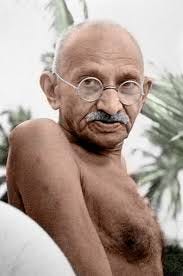
Mohandas K. Gandhi
Gandhi fundamentally disrupted the binary choice between violent resistance and passive submission. He introduced a third way: Satyagraha, a Sanskrit term he coined, which translates roughly to “truth-force” or “soul-force.”
For Gandhi, nonviolence (Ahimsa) was not a weapon of the weak; it was the ultimate weapon of the strong. He recognized that violence, even when used for a just cause, inevitably breeds more violence. The means and the ends are inextricably linked. “The seed is the means, the tree is the end,” Gandhi wrote. You cannot plant the seed of violence and expect to harvest the tree of peace.
Gandhian nonviolence is deeply moral and spiritual. It requires the activist to refuse cooperation with injustice while simultaneously maintaining a posture of love and respect for the oppressor. The goal is not to defeat the enemy, but to convert them—to awaken their conscience through the willing endurance of suffering. When Indians marched to the sea to make salt in defiance of British law, or when they allowed themselves to be beaten by colonial police without striking back, they were exposing the brutal reality of imperialism to the world, and to the British themselves.
However, Gandhi’s approach faced severe criticism from Just War theorists. What happens when the oppressor has no conscience to awaken? George Orwell famously pointed out that Gandhi’s methods relied on the existence of a relatively free press and a ruling class bound by some sense of legal decency. Against a totalitarian regime willing to slaughter millions in secret, Orwell argued, traditional Satyagraha would simply result in silent annihilation.
Nonviolent Fighting – Gene Sharp
If Gandhi was the spiritual father of nonviolence, Gene Sharp was its master tactician. Sharp, an American political scientist, stripped nonviolence of its religious and moral vocabulary and rebuilt it as a pragmatic science of power.
Sharp realized that asking people to love their enemies was a high barrier to entry. He argued that you do not need to be a saint to use nonviolent action; you just need to be strategic.

Gene Sharp
In his magnum opus, The Politics of Nonviolent Action (1973), Sharp dismantled the traditional view of political power. The traditional view—the one that underpins Just War Theory—assumes that power flows from the top down and rests ultimately on the capacity for violence. The ruler with the biggest army holds the power.
Sharp proposed a radical alternative: The Pluralistic Theory of Power. He argued that political power is actually fragile. A ruler’s power does not come from their weapons; it comes from the obedience, cooperation, and submission of the ruled. If the people refuse to obey—if the civil servants stop pushing paper, if the police refuse to arrest, if the workers go on strike—the ruler’s power evaporates, regardless of how large their military is.
Sharp cataloged 198 specific methods of nonviolent action, ranging from symbolic protests and boycotts to strikes and the establishment of parallel governments. His work became a playbook for dissidents worldwide, influencing the fall of the Marcos regime in the Philippines, the Velvet Revolution in Czechoslovakia, and the Arab Spring.
By framing nonviolent resistance as a form of asymmetric warfare rather than a moral imperative, Sharp directly challenged the Just War criterion of “Last Resort.” If nonviolent coercion can topple a dictator without firing a shot, then violent war is almost never the true “last resort.”
The Data Speaks – Chenoweth and Stephan
For decades, the debate between Just War and Nonviolence relied heavily on philosophical arguments and cherry-picked historical anecdotes. Just War theorists pointed to World War II; nonviolent advocates pointed to India and the US Civil Rights Movement.
Then came Erica Chenoweth and Maria J. Stephan.
In their groundbreaking 2011 book, Why Civil Resistance Works: The Strategic Logic of Nonviolent Conflict, Chenoweth (a political scientist who initially set out to prove that violence was more effective) and Stephan provided the first comprehensive, statistical analysis of the debate.

Erica Chenoweth
They analyzed 323 violent and nonviolent campaigns from 1900 to 2006 that sought maximalist goals (regime change, anti-occupation, or secession). The results sent shockwaves through the fields of international relations and military strategy.
The findings were staggering:
1. Double the Success Rate: Nonviolent campaigns were successful 53% of the time, compared to only 26% for violent campaigns.
2. The 3.5% Rule: Chenoweth discovered that no government in their dataset survived if just 3.5% of the population actively and sustainedly participated in a nonviolent campaign. Violent campaigns, by contrast, rarely mobilize more than a fraction of 1% of the population due to the high physical and moral barriers to entry.
3. Democratic Outcomes: Countries that transitioned via nonviolent resistance were far more likely to establish durable democracies and far less likely to relapse into civil war within a decade. Violent insurgencies, even when successful, usually resulted in new dictatorships, as the secretive, hierarchical structures necessary for guerrilla warfare simply transferred to the new government.
Why does civil resistance work so well? Chenoweth and Stephan argue it comes down to mass participation and “security force defections.” Because nonviolent campaigns are open to everyone—the elderly, children, the disabled—they generate massive societal pressure. When a soldier is ordered to fire on an armed rebel, they will shoot. When ordered to fire on a crowd that might include their own neighbors, teachers, or family members, they are highly likely to disobey. Once the security forces defect, the regime falls.
The Ethical Crossroads
The empirical data provided by Chenoweth and Stephan forces a profound ethical reckoning for Just War Theory.
Historically, the strongest argument for the justifiability of war was pragmatic: it is the only thing that works against ruthless aggression. But if statistical data proves that nonviolent resistance is actually more effective at achieving regime change and repelling occupations, then the “Reasonable Prospect of Success” and “Last Resort” criteria of Just War Theory are fundamentally disrupted. If a nonviolent campaign is twice as likely to succeed and infinitely less likely to destroy the country in the process, can taking up arms ever truly be justified?Yet, the debate is far from settled. Just War theorists raise valid counterpoints to the Chenoweth/Stephan data.
First, the dataset primarily focuses on internal regime change and anti-colonial struggles. It is less clear how effective nonviolent resistance is against an invading foreign army that does not rely on the local population’s cooperation. If Country A invades Country B simply to seize its uninhabited, resource-rich territory, boycotts and strikes by Country B’s citizens may mean nothing to the invading army.
Second, the specter of genocide remains the ultimate trump card for Just War Theory. In situations like Rwanda in 1994, the oppressors are not seeking the cooperation of the oppressed; they are seeking their extermination. In such a rapidly unfolding slaughter, there is no time to organize a mass strike or build a 3.5% coalition. The only thing that can stop a machete in mid-air is a bullet. In these extreme “ticking time bomb” scenarios, the moral imperative to use violent force to protect the innocent seems unassailable.
Nonviolent strategists counter this by arguing that genocides do not happen overnight. They are the result of years of systemic dehumanization. By the time the machetes are raised, the international community has already failed dozens of times to utilize nonviolent interventions, sanctions, and diplomatic coercion. Furthermore, introducing violence into a genocidal situation often escalates the death toll and creates generational cycles of retribution.
The ethical debate over the justifiability of war has shifted dramatically over the last century. It has moved from a strictly theological and philosophical dispute about the morality of violence to a highly sophisticated, data-driven debate about human psychology, power dynamics, and historical outcomes.
Just War Theory remains a vital framework. As long as human beings possess the capacity for sudden, ruthless aggression, there will likely be a need for the ethical application of force to protect the vulnerable. It provides the essential vocabulary we use to condemn war crimes and hold leaders accountable.
However, the Gandhian tradition, sharpened into a strategic weapon by Gene Sharp and validated by the data of Chenoweth and Stephan, proves that humanity is not doomed to endless cycles of bloodshed. Nonviolence is no longer a fringe, utopian ideal. It is a proven, strategic alternative to war.
Yes, disappointingly, Erica Chenoweth, now a professor and dean at Harvard, reports that since 2010 there has been a sharp reversal in the trend found in her book with Stephan, which was based on conflicts from the 1960s to the late 2000s. Civil resistance is no longer as successful. Apparently, dictators have learned how to suppress people’s movements. Mainly, however, Chenoweth attributes these failures to changes within the movements themselves, including inadequate preparation, poor strategic planning, small-scale participation failing to reach the 3.5% threshold, and the increasing presence of violent fringes, not solely to stronger state repression.
In any case, the policy issues have not been, and probably never will be, settled permanently. When oppression occurs, this question may always arise: Should we go to war about this?
Re "All international public opinion polls showed the majority of citizens of virtually every country always wanting nuclear weapons to be abolished, but they lacked any means of forcing the nuclear weapons states to comply. Finally, the governments of Norway, Mexico, and Austria convened several conferences that succeeded." As the next sentence indicates, the nuclear armed states refursed to join the TPNW, so it cannot be said that the treaty "succeeded" forced compliance. To date not one nuclear weapon state nor a single NATO member has signed on.
re: "For example, in 1763 the British forces defending Fort Pitt, near Philadelphia, gave blankets from smallpox patients to Indian chiefs who had come to negotiate an end to their conflict."
This story is mostly based on a single incident at Fort Pitt, and it was not repeated, according to the historical record. In addition, it is also believed that the blanket(s) in question probably had little additional impact because the smallpox contagion was already in circulation in the area. The story is based on a single letter and journal entry. The journal reads: "“Out of our regard to them we gave them two Blankets and an Handkerchief out of the Small Pox Hospital. I hope it will have the desired effect.” — William Trent's Journal at Fort Pitt. A more detailed account of this frequently circulated but questionable claim can be found here: Philip Ranlet, “The British, the Indians, and Smallpox: What Actually Happened at Fort Pitt in 1763?” https://journals.psu.edu/phj/article/download/25644/25413
See also this article, which describes the smallpox blanket incident as a "subborn legend" with a modicum of truth (the letter): https://historynet.com/smallpox-in-the-blankets/